Higher floods, hotter steel, fiercer scour. How design codes and our own detailing are adapting to keep river crossings standing for a century.
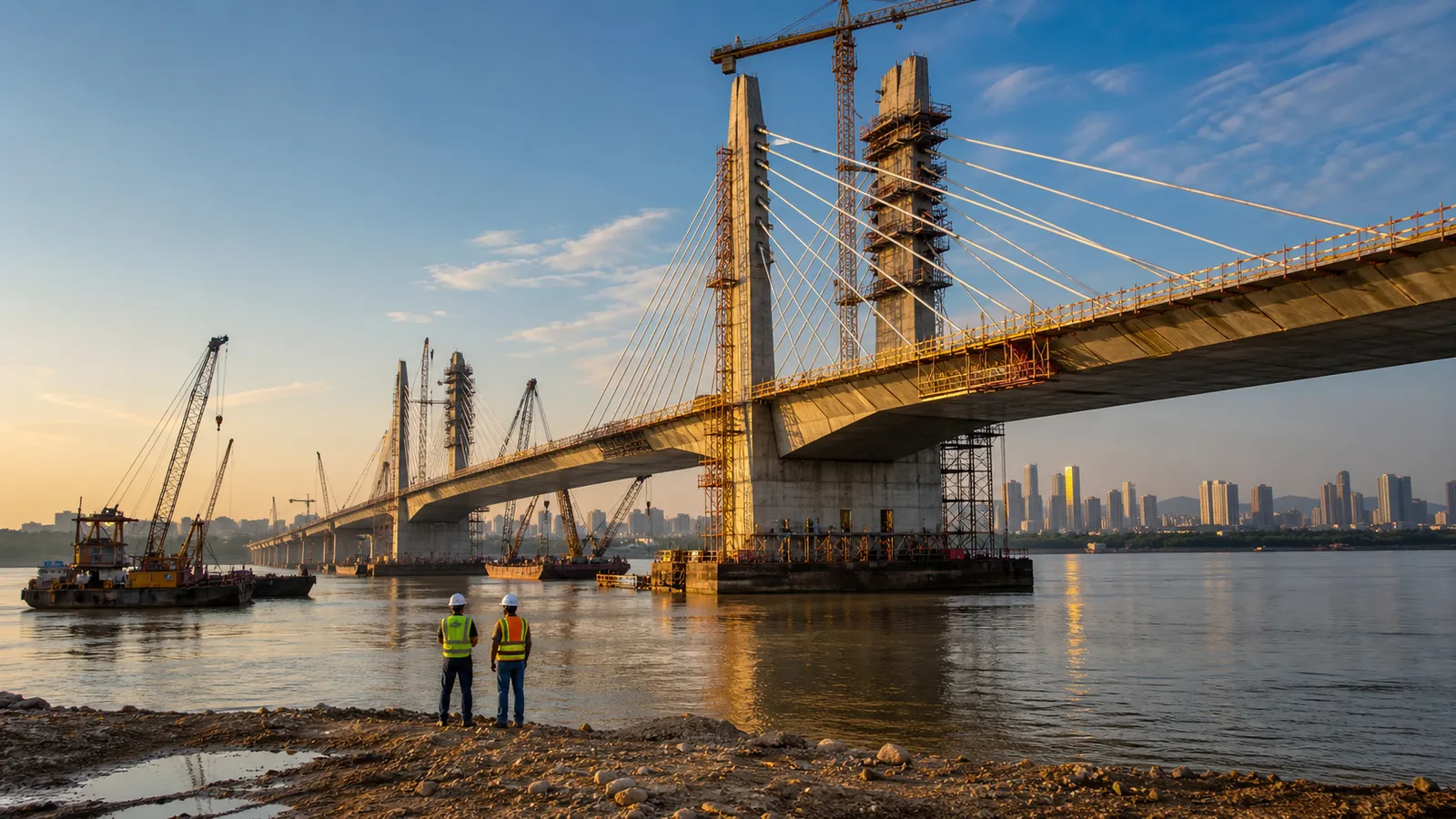
Bridge design has always been a negotiation with water. What has changed is that the water is no longer stationary in our assumptions. Higher-intensity rainfall, fiercer flash floods and shifting river morphology mean the hydraulic conditions a bridge will see in 2070 may bear little resemblance to the historical record it was once sized against.
Our response runs through three layers. First, scour, the silent killer of bridges, is now designed with climate-adjusted flood return periods and deeper, monitored foundations. Second, materials: high-performance, low-permeability concrete and protective detailing extend service life in more aggressive environments.
We no longer design for the river we measured. We design for the river it is becoming.
Third, and most importantly, instrumentation. Every major crossing we build now leaves the yard with embedded sensors, for strain, scour, temperature and movement, feeding a digital twin. The bridge tells us how it is ageing, so maintenance is driven by data, not by the calendar.
A bridge is a hundred-year promise. Keeping that promise in a changing climate means designing for the conditions of the next century, not the last one.
This is an illustrative article for a concept site. Meridian Infrastructure is a fictional group created to demonstrate 4AM Tech's web design and engineering.