From desalination on the coast to a tap in a remote village: why closing India's water gap is as much about pipes and pumps as policy.
India's water challenge is often debated as a question of governance and pricing. Those matter enormously. But between a water policy and a working tap lies a vast amount of physical infrastructure, intakes, treatment plants, trunk mains, pumping stations, storage and the last-mile network, that has to be designed, built and operated.
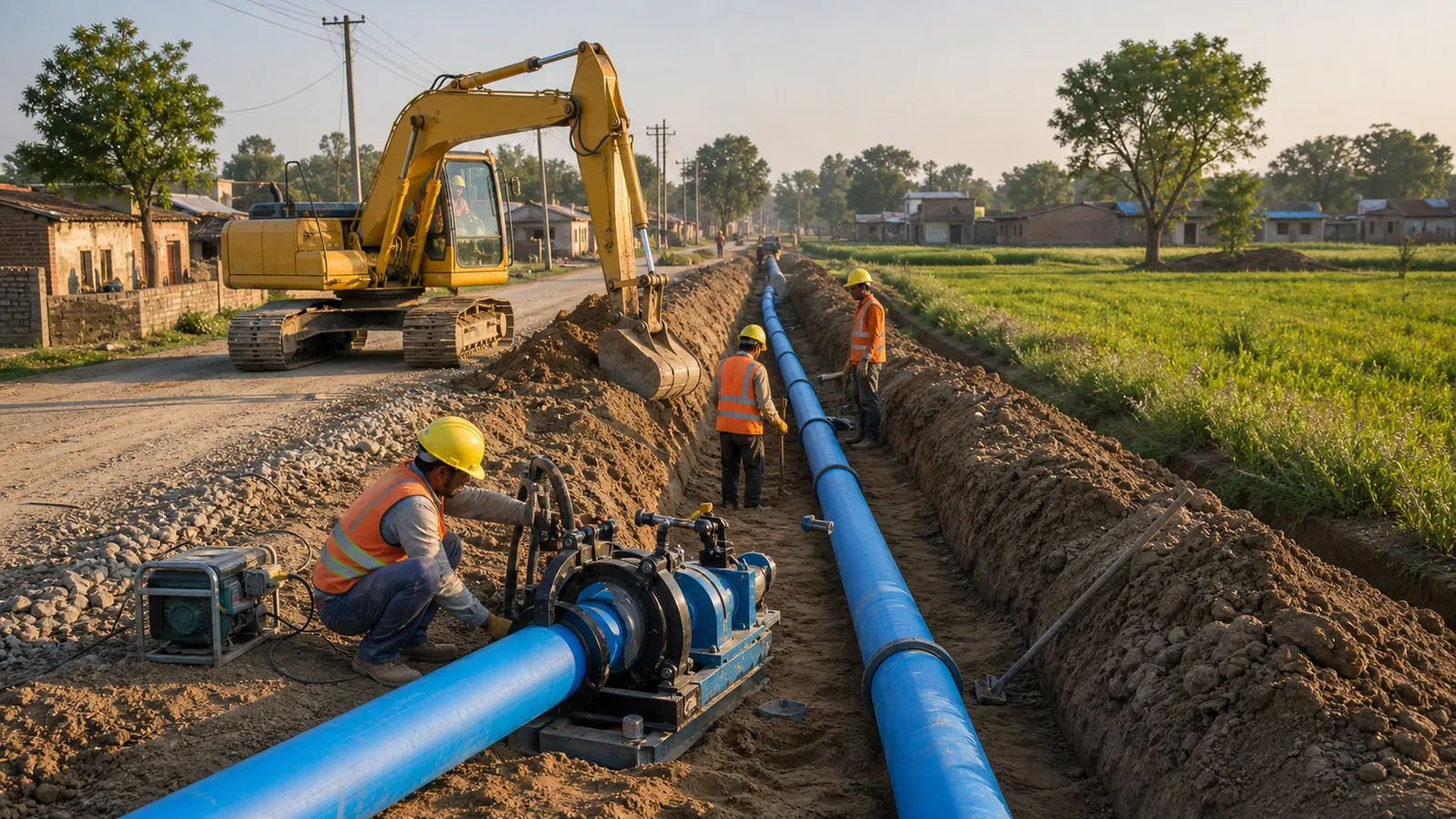
The geography is unforgiving and varied. On the coast, the answer increasingly is desalination, energy-intensive and capital-heavy, demanding marine intakes and outfalls built to survive cyclones. Inland, it is surface-water grids carrying treated water hundreds of kilometres to villages that have never had a reliable supply.
You cannot policy your way to a tap. At some point, someone has to lay the pipe.
What ties them together is reuse. Treating sewage to a standard fit for industry and irrigation, and actually plumbing it back into the system, is the cheapest 'new' water available. Our treatment plants are increasingly designed for reuse from the outset, not as an afterthought.
Closing the water gap is, in the end, an execution problem at enormous scale. It will be solved by pumps and pipes and plants, built well and maintained for decades, which is precisely the work we do.
This is an illustrative article for a concept site. Meridian Infrastructure is a fictional group created to demonstrate 4AM Tech's web design and engineering.