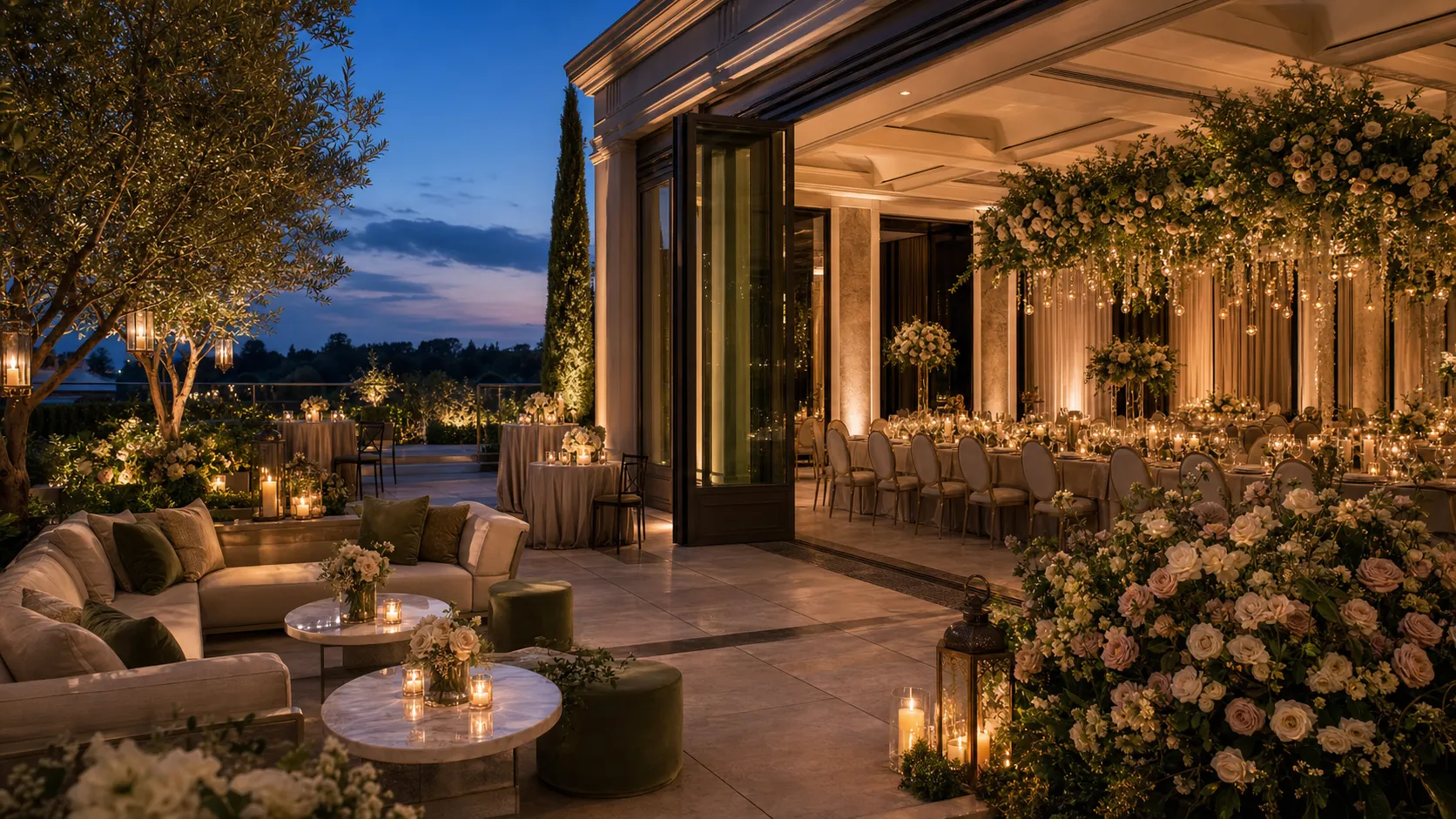
A Lake Wedding,Udaipur.
THE BRIEF
A house, a lake,and four evenings.
The family came to Lower Parel with a date in late November and a single sentence: they wanted the lake to do most of the talking. Six hundred and forty guests would arrive across three days, from Bombay, London and Dubai, and the bride had asked for exactly one thing in writing: that nobody should ever feel hurried from one evening to the next.
That is the whole brief, and it is the hardest kind. A wedding that refuses to feel hurried has to be built so that the host never sees the seams: the boats running on time, the candles lit before anyone notices they were unlit, the band already warm when the first guest steps off the jetty. The house took the commission in March and filed it as Work No. 027.
THE BUILD
Eleven days,two barges.
Everything that floats on a lake has to arrive by water. The house took eleven days on site, the first four of them spent moving fabricated structure from a staging yard on the shore to two barges hired for the season. Mandap frame, the dance floor, the long reception table in three sections, four tonnes of staging steel and fourteen hundred glass storm shades crossed the water at first light, when the lake is flattest and the wind has not yet found the open stretch.
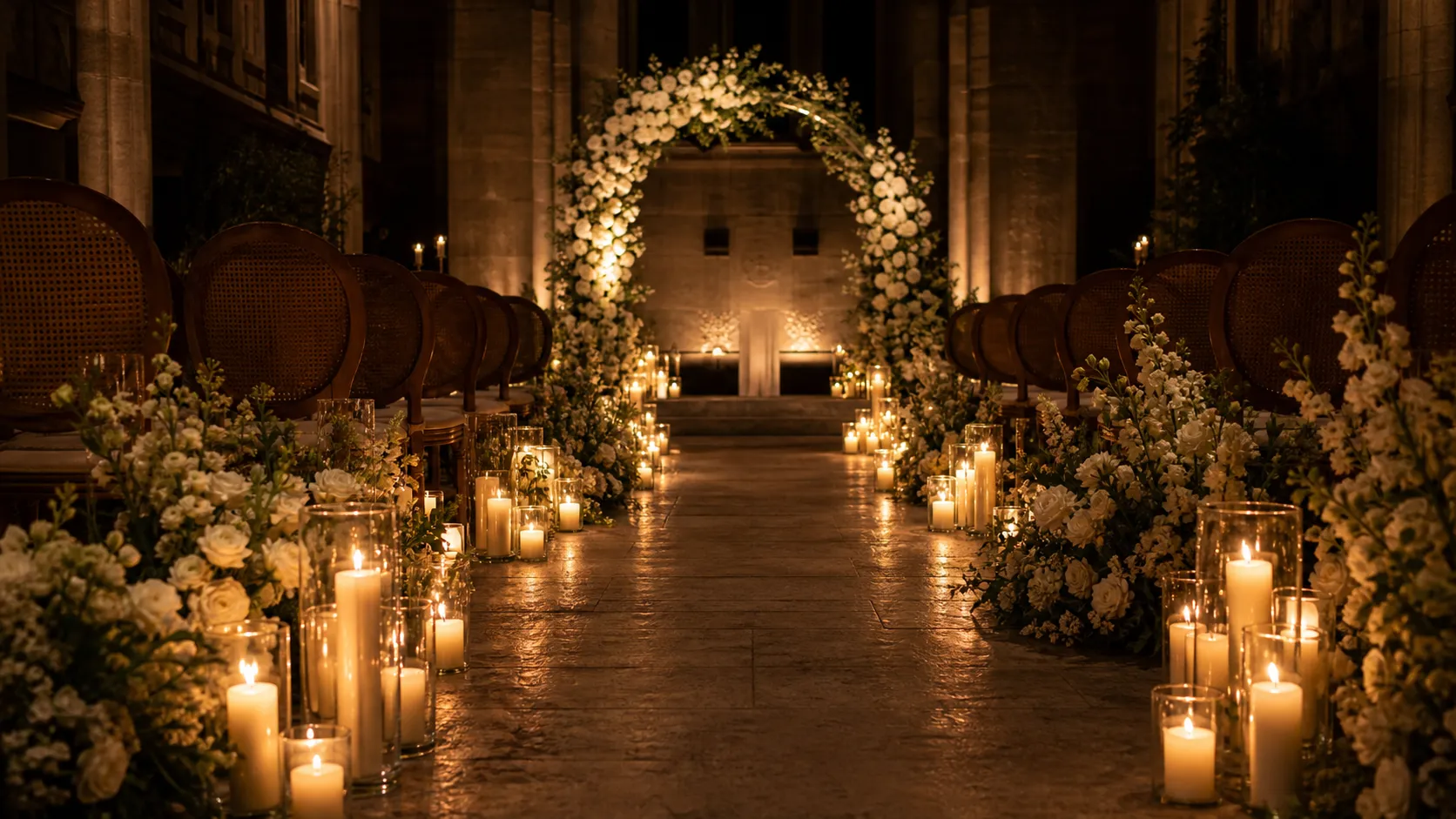
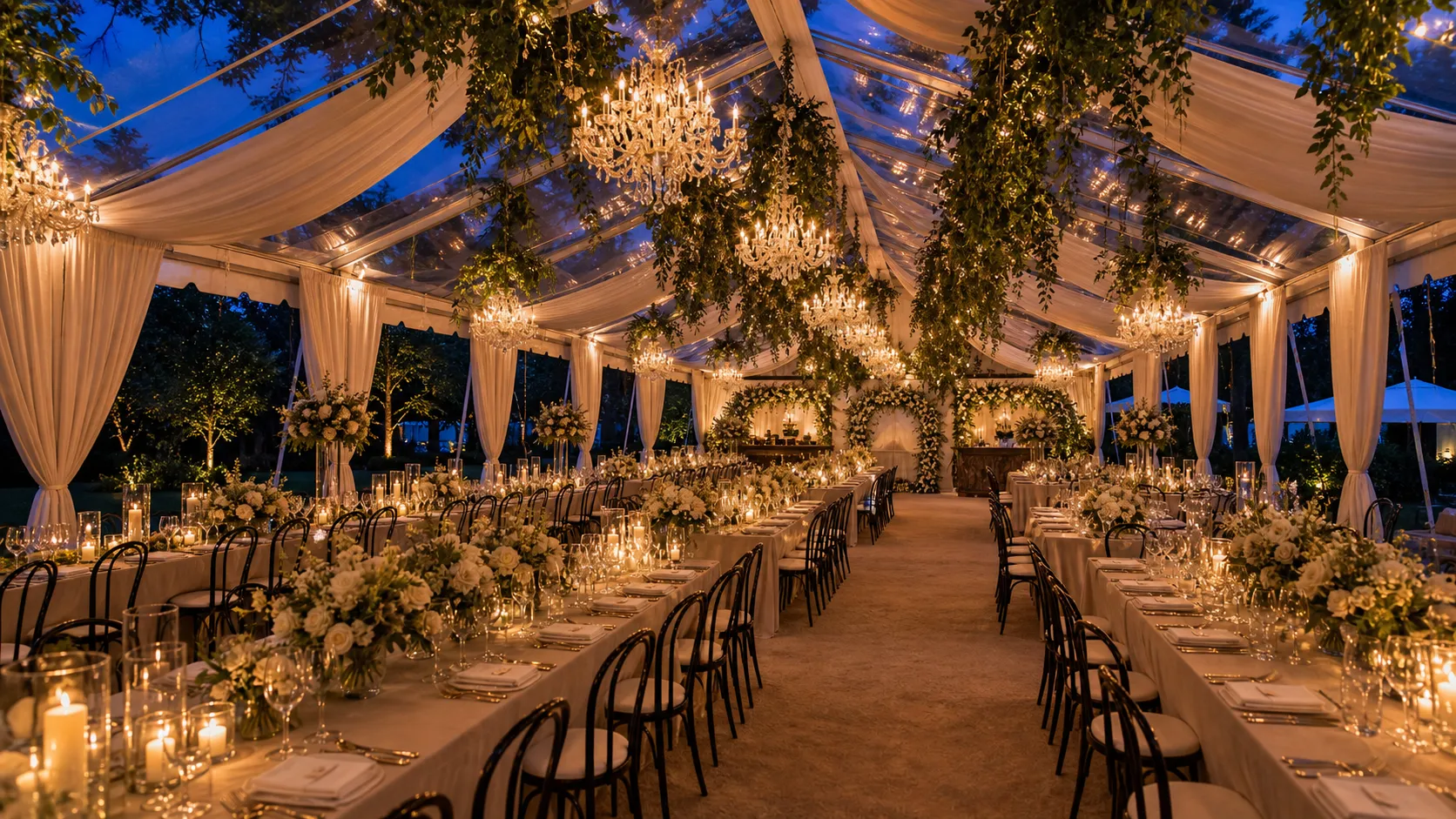
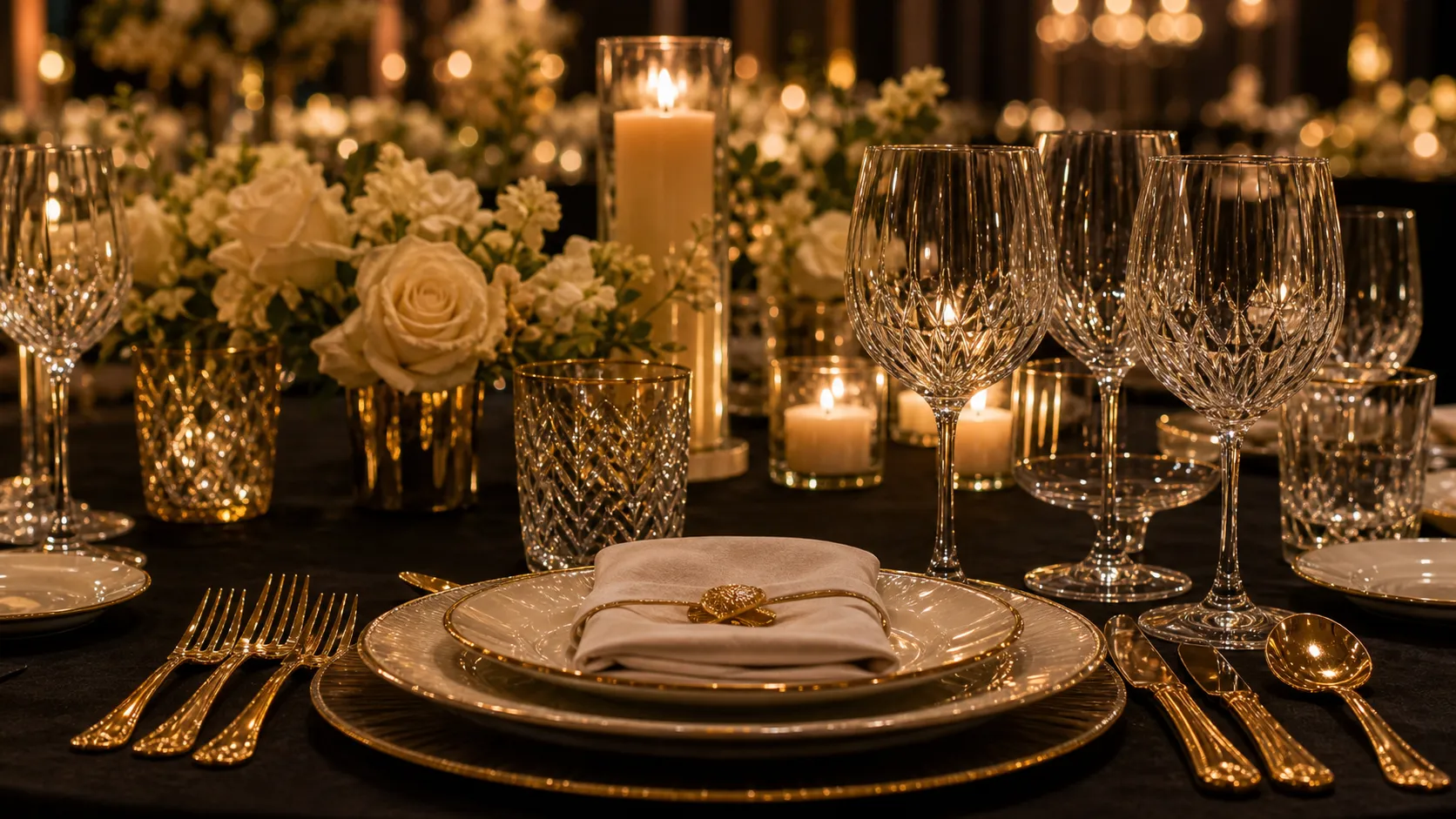
The works at Taloja had drawn and trial-assembled the whole reception pavilion a month earlier, then struck it and labelled every joint, so that on the island a crew of forty could raise it in a day and a half. Eleven thousand candles were specified for the four evenings, lit twice, once for the rehearsal and once for the night itself, which is the only honest way to test fire on a lake. Two fire marshals stood off the floor for every event. None of it was visible from a single guest seat.
THE FOUR EVENINGS
One arc,told in four nights.
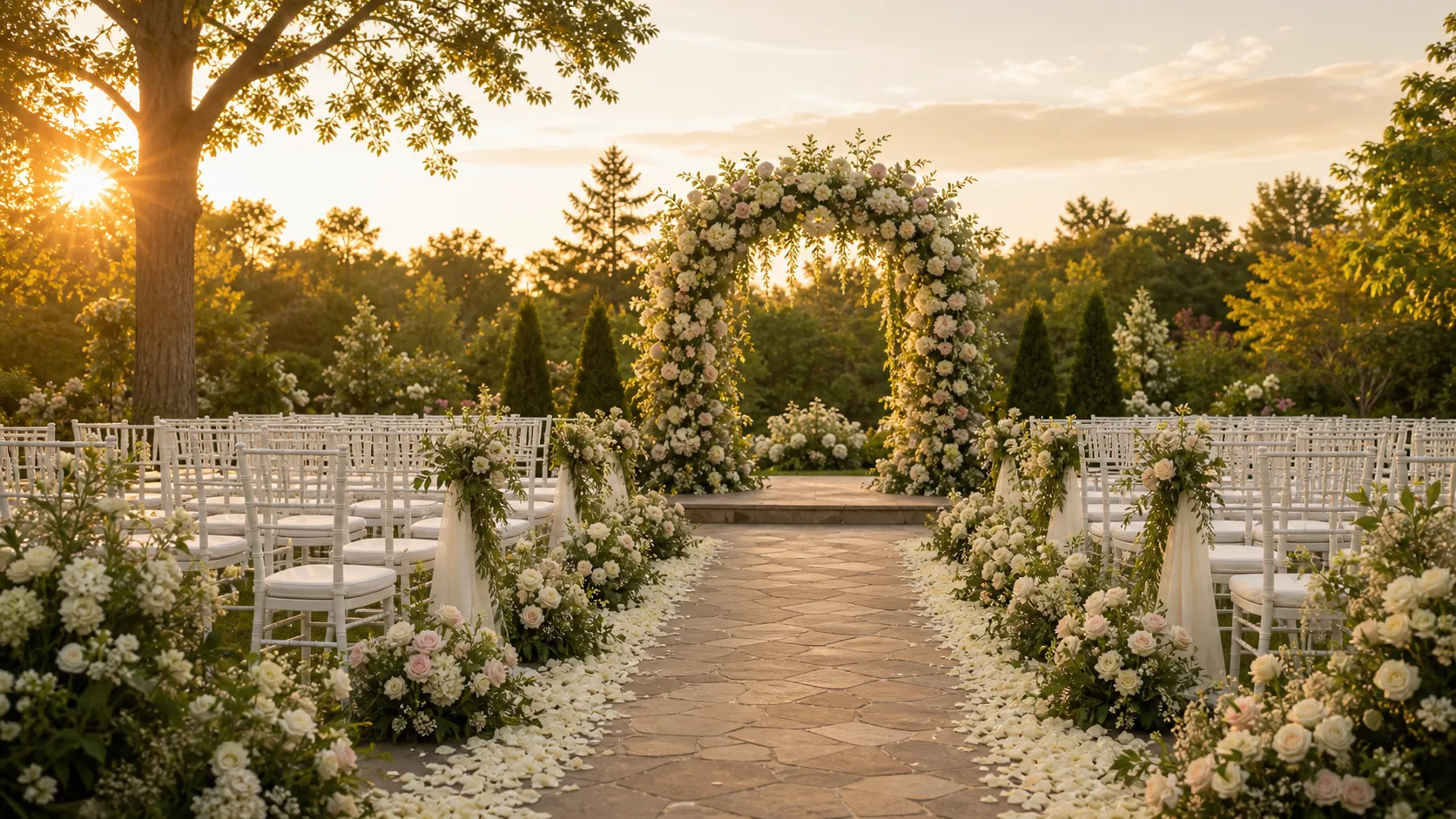
The first evening was the welcome, set in a walled garden on the shore so that nobody had to board a boat tired from a flight. Long tables under fig trees, a marigold canopy strung between the walls, and a quiet dinner that ended early on purpose. The house calls the first night the one that decides the other three; if the guests sleep well, everything after is easier.
The second evening was the sangeet, and it was the loud one. The family wanted eleven performances and got them, on a stage that turned from a band riser to a runway to a dance floor across three hours, lit gold against the black water. The bar ran from two service points on opposite ends of the barge so that the crowd never gathered in one corner and tipped the deck.
The third evening was the pheras, the only one the house keeps quiet and slow. The ceremony was built in the old stone colonnade, lined with the candles in the plate above, and held at the hour when the sky goes from blue to ink. Nothing amplified, no stage, no programme. One aisle, two families, and the lake behind.
The fourth evening was the reception, the one in the hero of this page: a single sixty-metre table on the pavilion, a champagne service that began at the water and walked inward, and a midnight kitchen that sent out a fourth course nobody had been told to expect. The last boat left at four. The house struck the whole island in forty-eight hours and left the lake as it found it.
“Eleven thousand candles. Lit twice, once for the rehearsal. We never once smelled smoke.”
The credits
Some evenings arebuilt by hand.
Begin an enquiryTHE HOUSE IS NOW RESERVING WINTER 2027