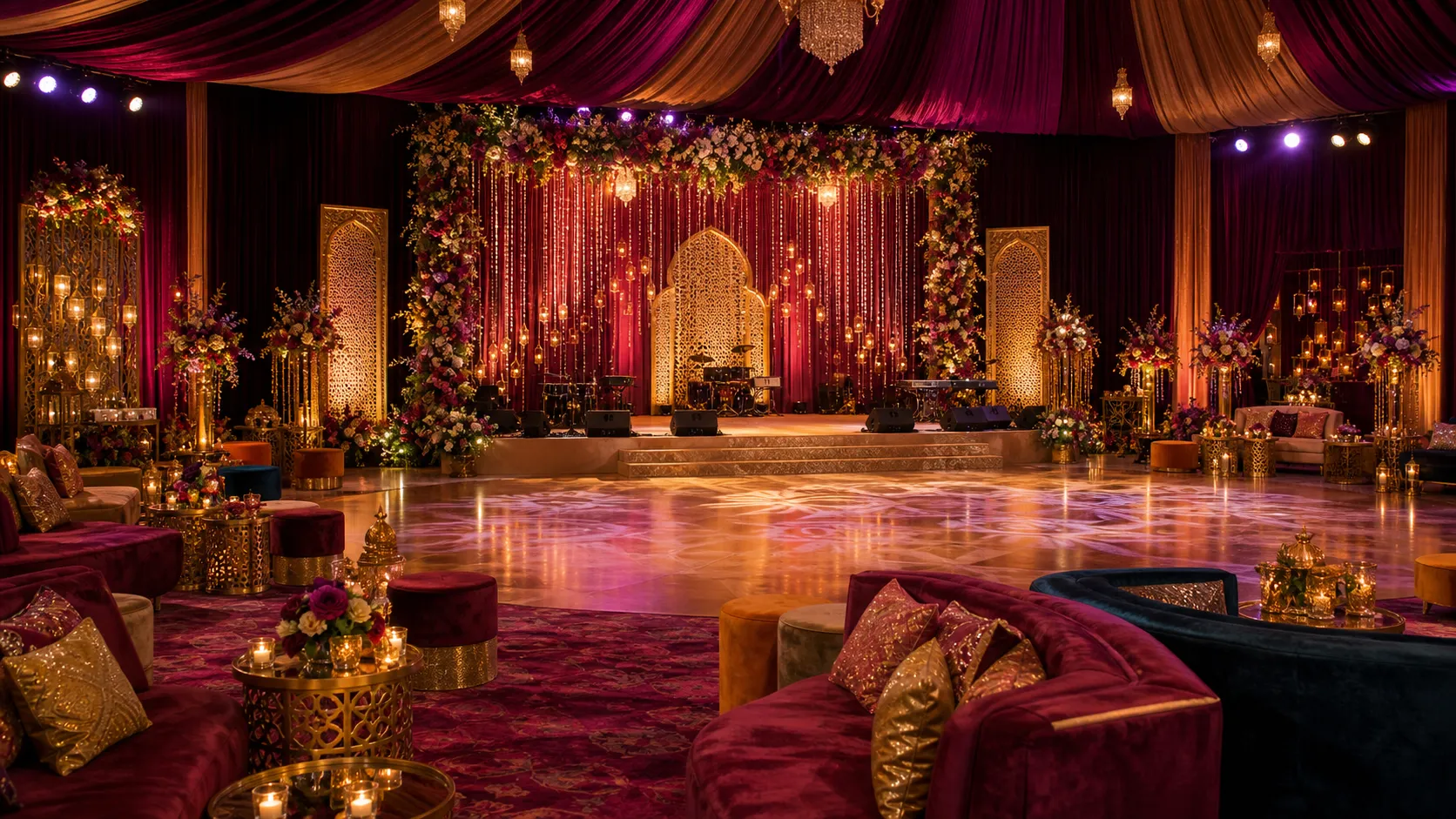
A Sangeetin Magenta.
THE NIGHT
Six families,eleven acts.
A sangeet is the loud heart of a wedding, and this one carried more weight than most: two families joining, and around them four more who had grown up together and insisted on performing. Six households, eleven acts, three hundred and eighty guests, one night in Jaipur. The bride asked for magenta and got it everywhere: in three thousand lamps, in the drape, in the light that the house ran warm all evening so that every photograph would come back the same colour.
Eleven acts is a programme, not an open mic. The house spent a fortnight in the months before turning a list of enthusiastic relatives into a running order with an interval, a key change, and a finale that pulled all six families onto the floor at once. Each act was rehearsed to a length. The grandmother’s act, which the family swore would run two minutes, ran two minutes.
THE STAGE
One stage,four shapes.
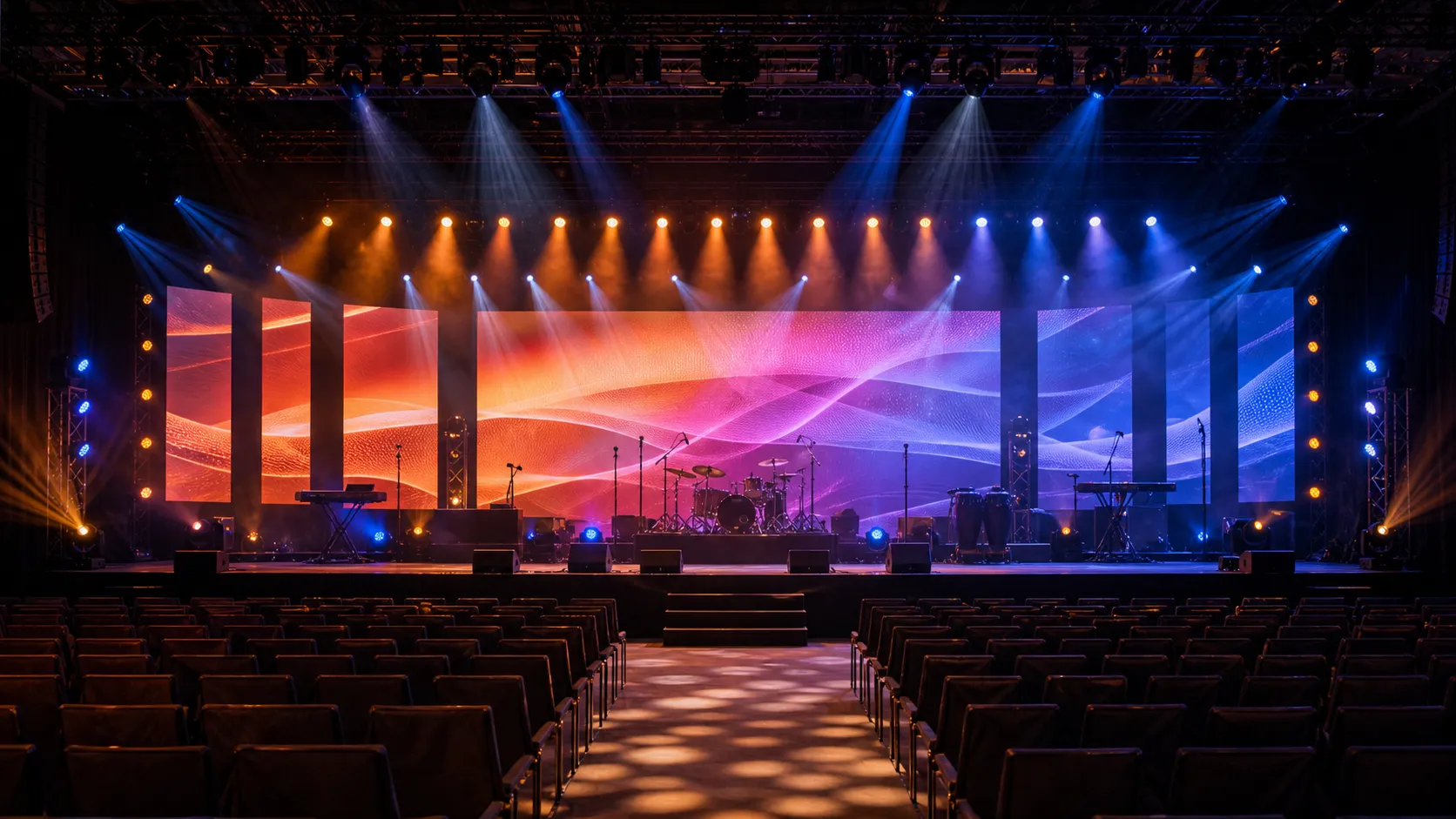
The hardest object on the night was a single stage that had to be four things in three hours: a band riser for the opening, a flat floor for the family acts, a raised plinth for the couple’s first dance, and finally an open floor that swallowed all three hundred and eighty guests. The works at Taloja built it as a set of tracked decks that two crew could reconfigure behind a lighting cue in under ninety seconds, in the dark, without a sound the band could not cover.
The lighting carried the colour. Three thousand lamps were hung, but the magenta that defines the night came from a wash the house held at one temperature from the first act to the last, so that the room never shifted under anyone’s feet. Guests remember a single colour. It took four people on a desk to keep it single.
THE ARRIVALS
Three hundredand eighty, in.
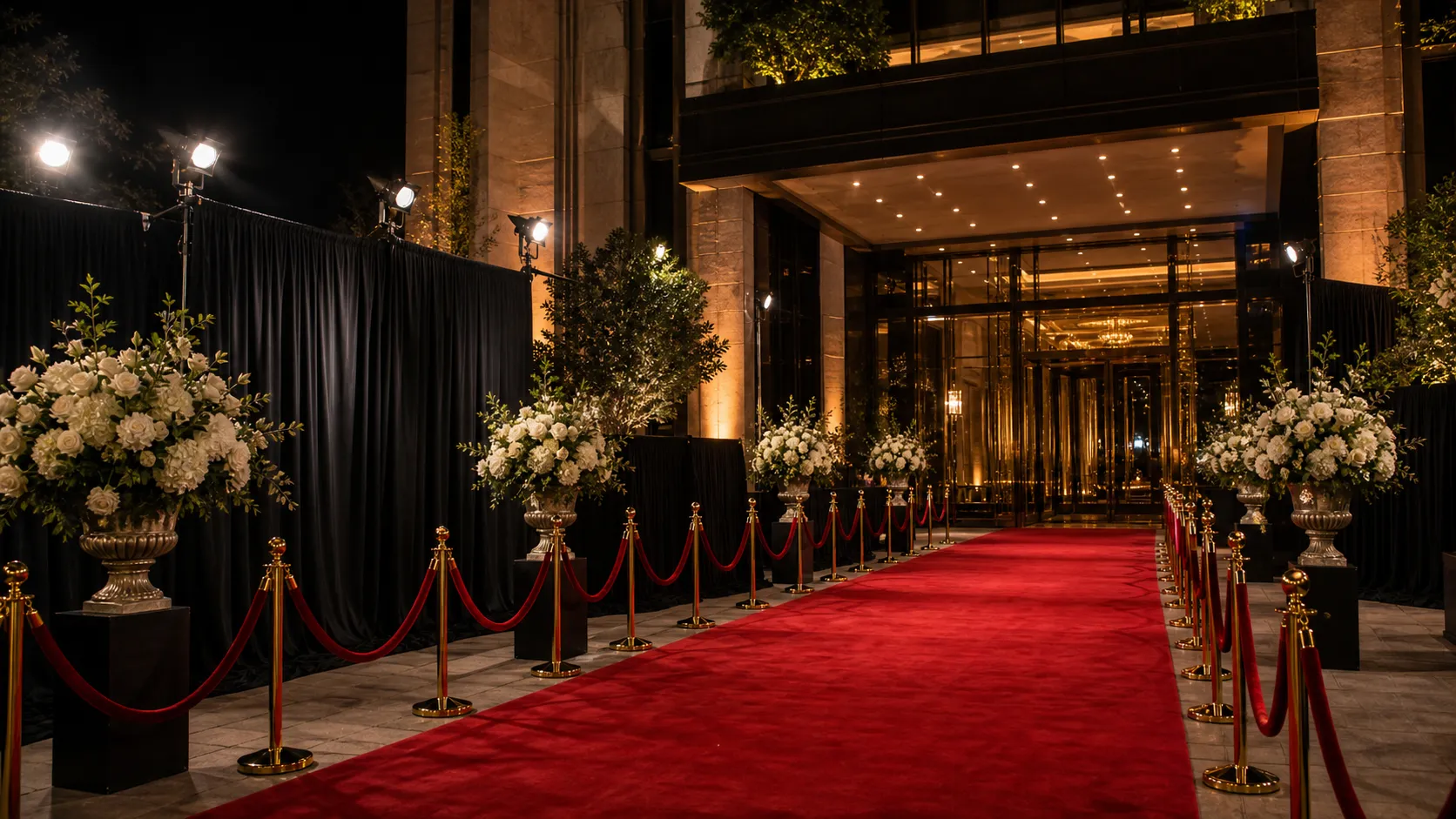
Three hundred and eighty guests arrived across forty minutes, down a lit walk the house built so that the night began the moment a car door opened. Arrivals are a piece of design the host never thinks about and always feels; if they bottleneck, the whole evening starts behind. Two drop points, a single warm light, and a quiet steward at each meant the room filled without a queue, and the first act began on the minute it was called.
THE LATE HOURS
A midnight table,a mehndi morning.
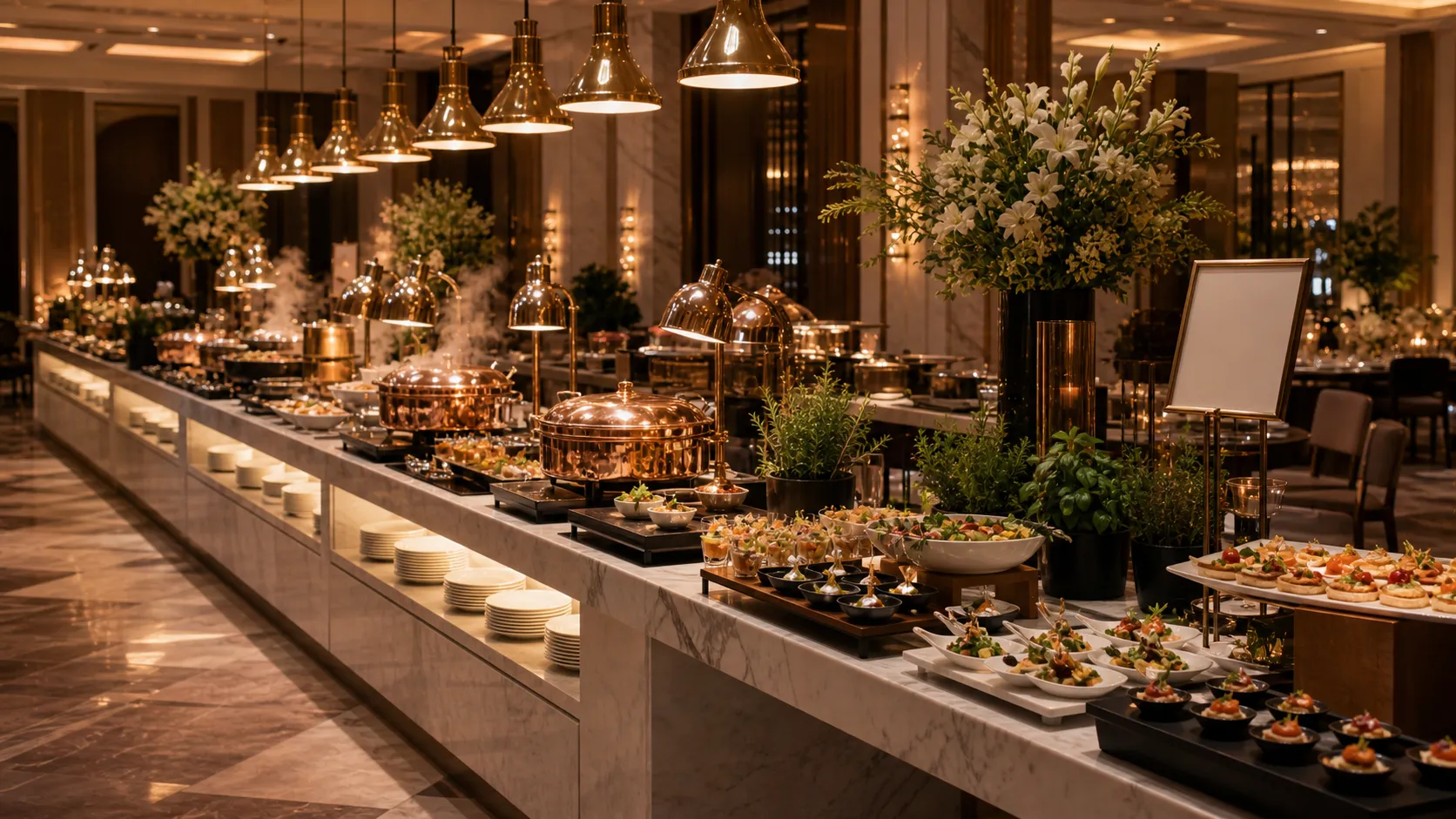
The kitchen of forty cooks held the floor until two. A copper buffet ran the length of one wall and was restocked four times without ever appearing empty, because Table & Cellar plans a service the way the Production Office plans a cue sheet: backwards, from the last plate served. The midnight course, a single hot dish sent out unannounced to three hundred and eighty people at once, is the one the family still writes about.
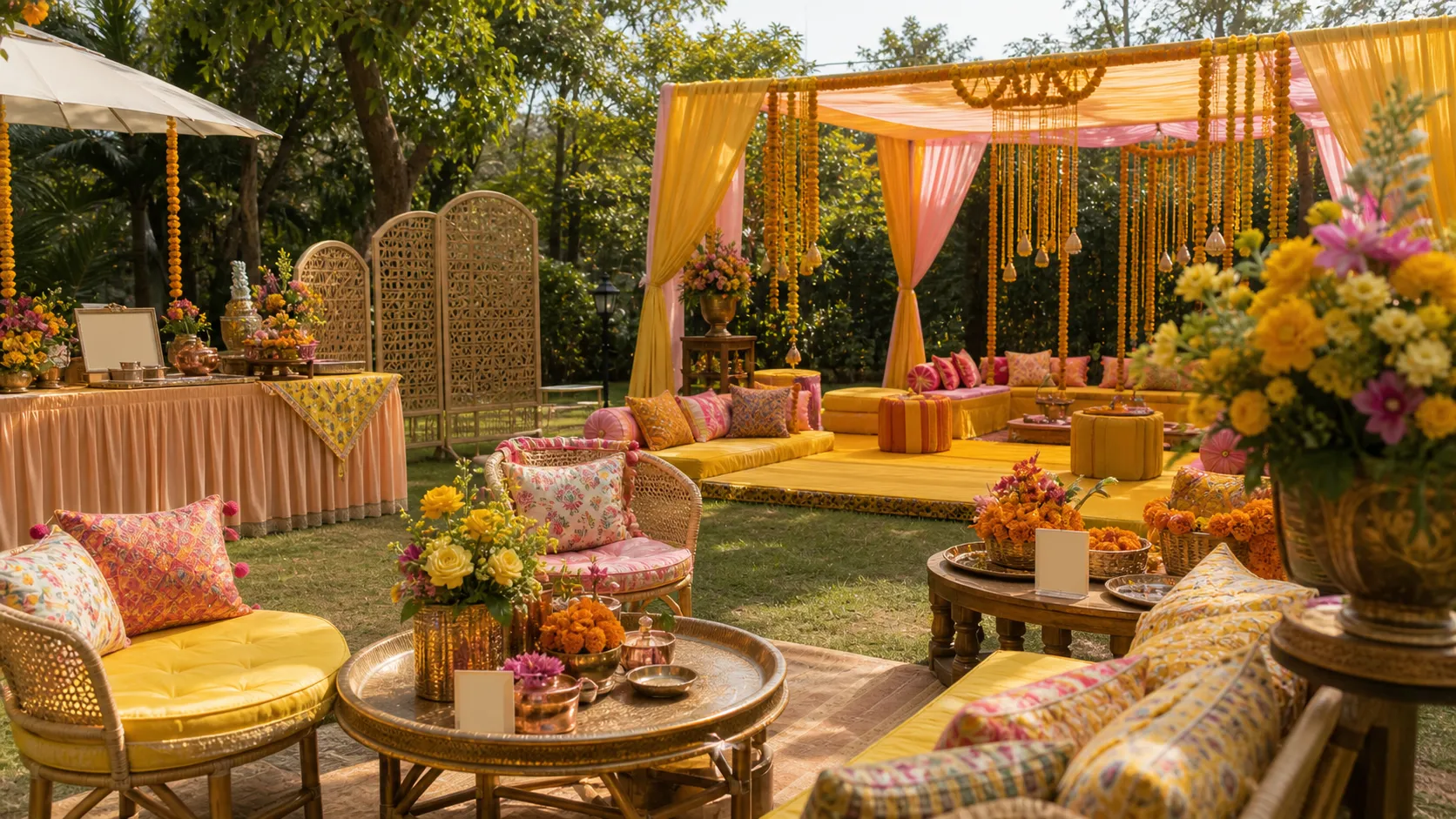
The sangeet does not stand alone. It sat inside a wedding, and the morning before it the same house had dressed a garden in marigold and pink for the mehndi, a slow, bright, daytime affair that is the opposite of the night to come. Building both, hours apart, with one crew, is the whole argument for keeping the work under one roof.
“Eleven acts, and not one of them ran long. My mother’s still asks how they managed her cousins.”
The credits
The house signsits work in rani.
Begin an enquiryTHE HOUSE IS NOW RESERVING WINTER 2027