Academics
A continuum of curiosity.
One unbroken education from three to eighteen, taught by people who know each child by name. The early years lead naturally into Cambridge IGCSE and then the IB Diploma, with no joins you can feel.
How we teach
Rigour, kept in the open.
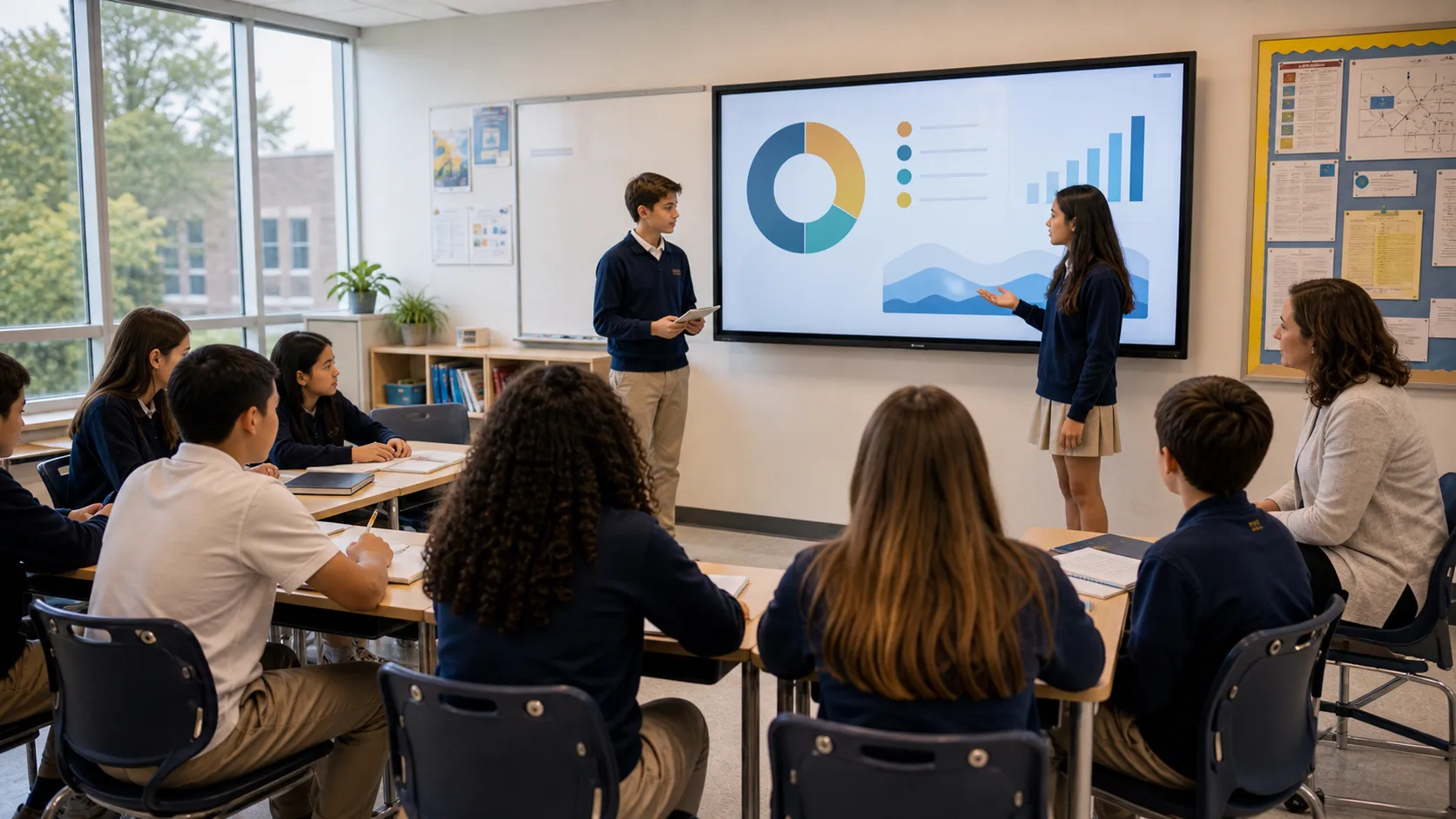
Our approach is unfashionably simple. We give children real materials and real questions, we keep classes small enough for everyone to be heard, and we let understanding set before we move on. Ambition and gentleness are not in tension here: the most demanding work happens in the calmest rooms.
A child who learns to reason well at six is, in every way that matters, the same child who sits the IB Diploma at eighteen. The continuity is deliberate. Habits of evidence, argument and revision are introduced early and returned to, year after year, until they feel less like school and more like the way a thoughtful person meets the world.
Inquiry before instruction
Lessons begin with a real question, a specimen on the bench, a contradiction in a text. Children form a view first, then test it against evidence and against one another. The teacher guides the argument rather than ending it.
Mastery, not coverage
We would rather a child understood ten things deeply than met fifty in passing. Progress is paced to the learner, and a topic stays open until the foundation is genuinely secure.
Small rooms, known children
An eight-to-one ratio is not a number on a brochure. It is the reason a teacher notices the held-back hand, marks work the same week and writes reports that read like a person who was actually in the room.
The four stages
One school, four chapters, no joins.
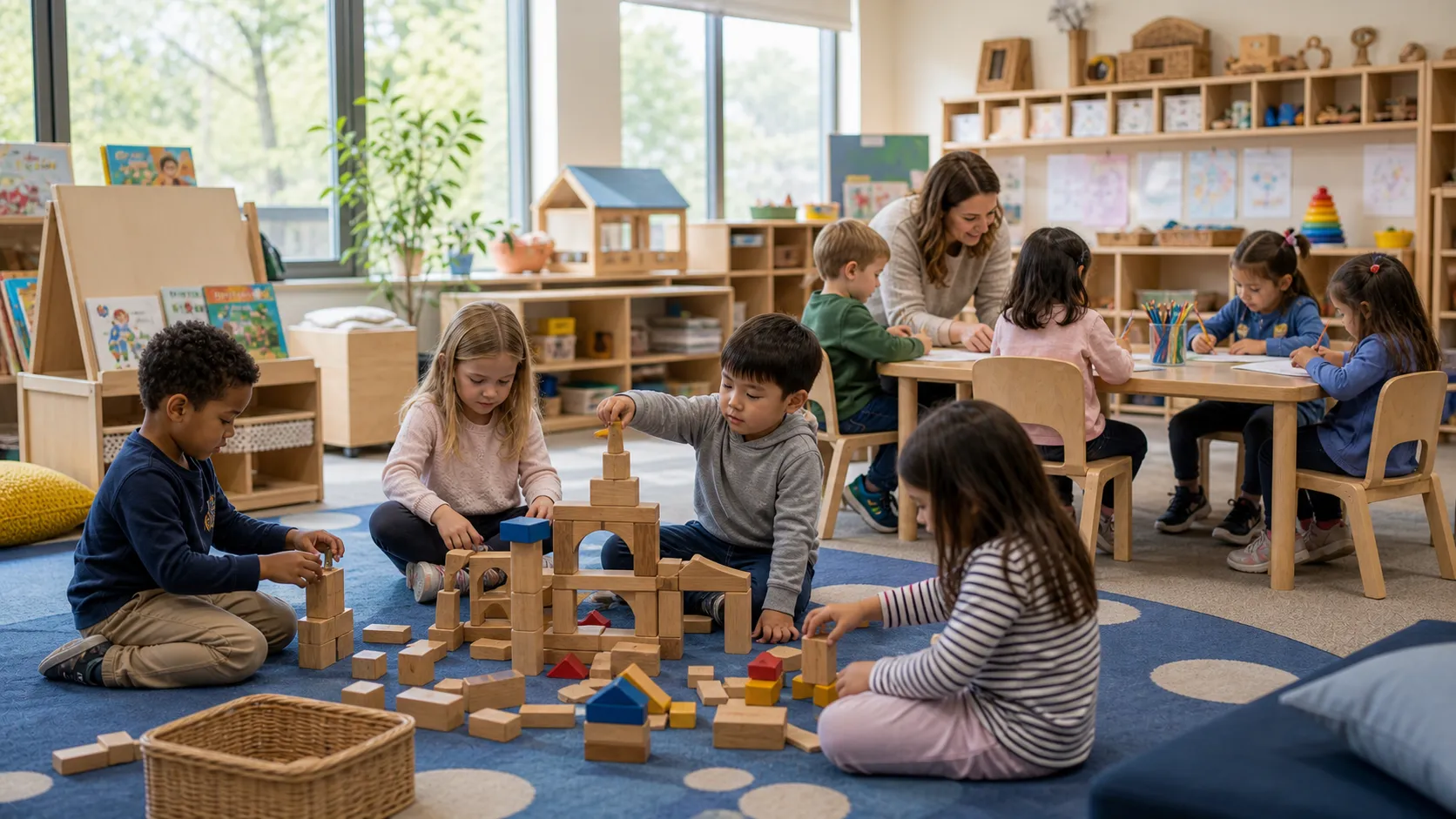
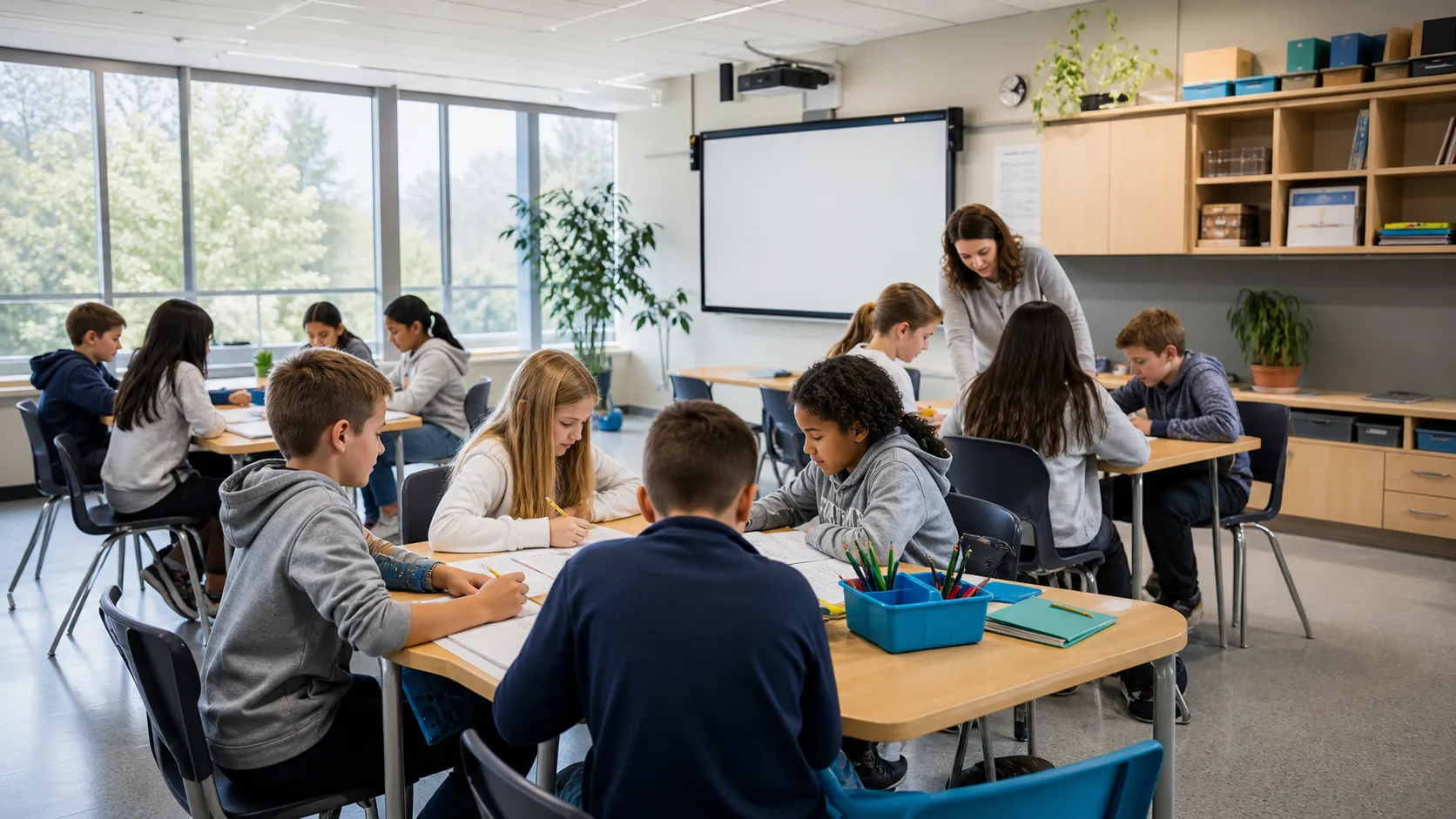
Each stage has its own character and its own building, yet the thread runs straight through. A child moves on only when the ground beneath them is firm, and the teachers on either side of every transition talk to one another before they do.
Early Years
Primary

Middle School
Senior School
Core disciplines
A broad curriculum, taught with depth.
Reason, made visible
The long conversation
Evidence, not assertion
Every pupil reads widely, calculates confidently and works with their hands. We hold the breadth open for as long as we sensibly can, so that specialism, when it comes, is a genuine choice rather than an accident of timetabling.
The arts and design sit alongside the sciences as equals, not as relief from them. A physicist who can draw and a violinist who can code are, in our experience, simply better thinkers.
- ·English language & literature
- ·Mathematics & further mathematics
- ·Biology, chemistry & physics
- ·History, geography & global politics
- ·Hindi, French, Spanish & Mandarin
- ·Visual arts, drama & music
- ·Design, engineering & computer science
- ·Physical education & games
Curriculum & examinations
Two recognised pathways, one careful arc.
From fourteen, pupils sit Cambridge IGCSE: a broad, internationally respected base across the sciences, mathematics, languages and humanities. It is where independent study habits are built and where examination technique becomes second nature.
At sixteen they move into the IB Diploma, three higher and three standard subjects held together by Theory of Knowledge, the Extended Essay and Creativity, Activity, Service. It rewards the student who can think across subjects, write at length and act on what they have learned, which is the kind of leaver universities tell us they want.
On assessment
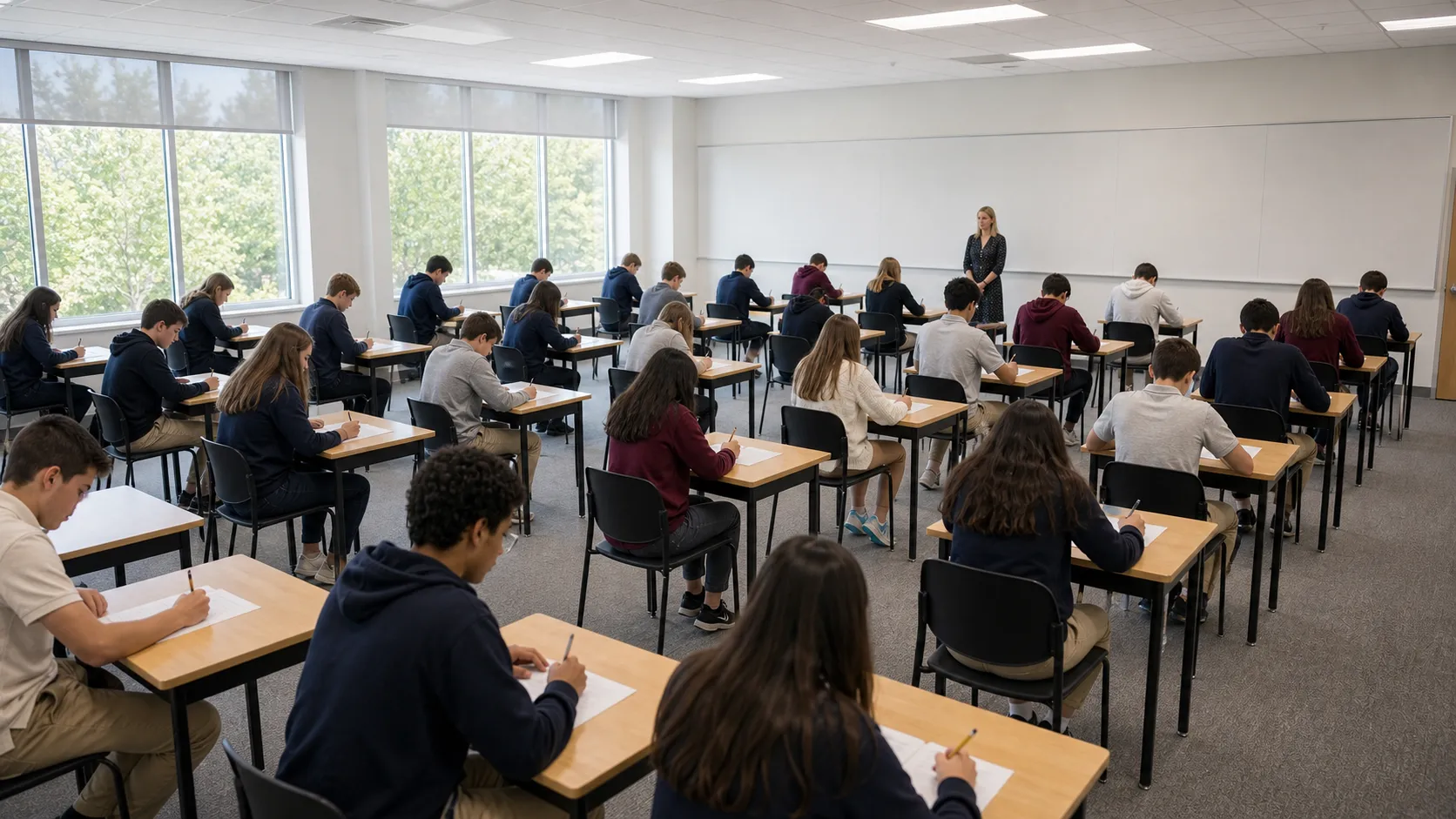
We assess to understand, not to rank. Coursework, viva-style discussion and timed papers each play a part, and feedback is written to a child rather than at them. Grades matter, and we are open about ours, but they are the consequence of good teaching, never its purpose.
A sample of IGCSE subjects
Explore a stage
Begin where your child is now.
Come and see
The curriculum reads differently when you watch it taught.
Spend a morning in the the sahyadri foothills, sit at the back of a lesson and talk to the people who will teach your child.