Notes on athousand candles.
A flame is the only material the house buys by the thousand and trusts by the one.
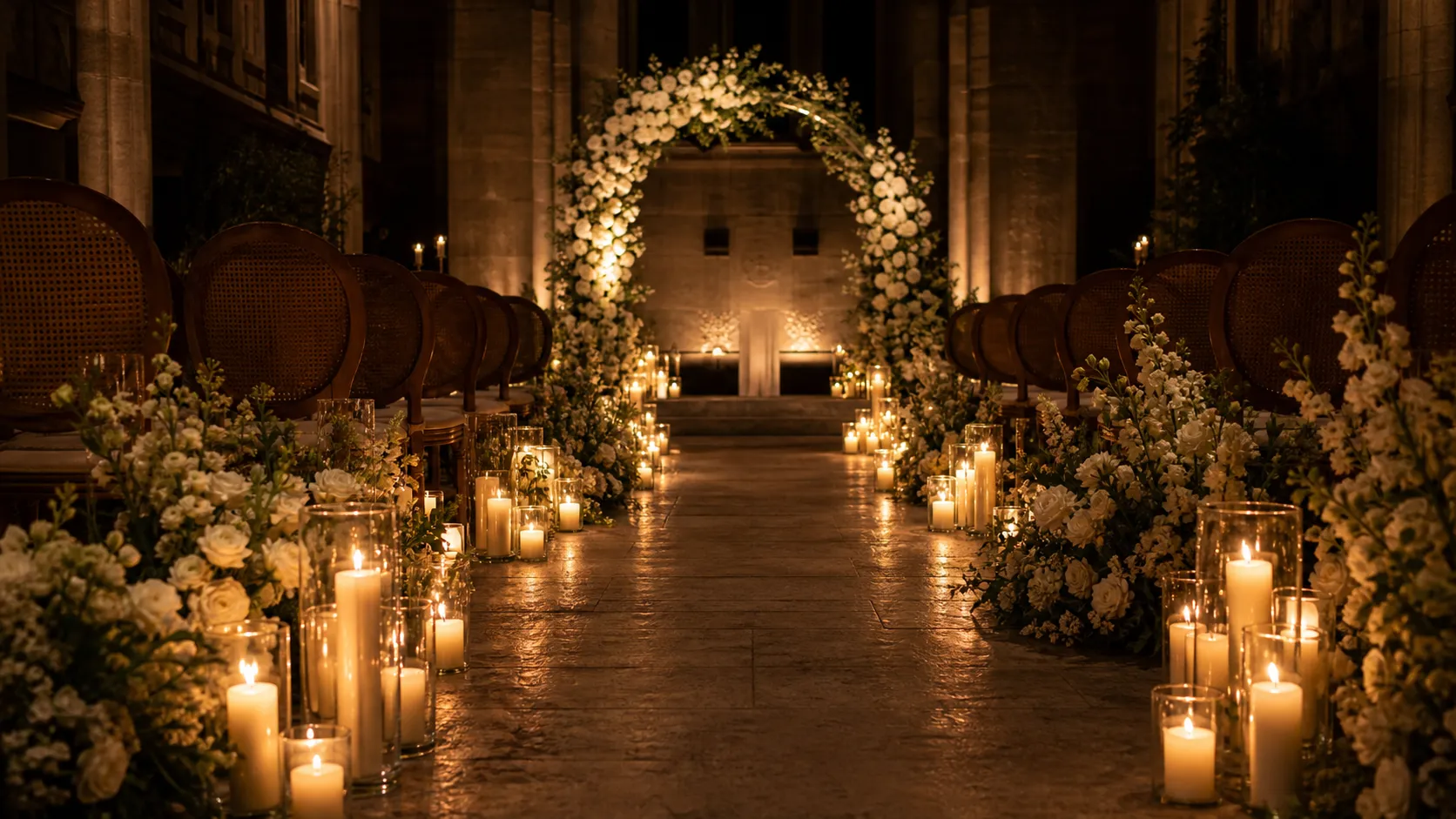
People think candlelight is a mood. It is closer to a discipline. A single taper is a romantic thing; eleven thousand of them in a stone hall is a piece of engineering that has to be drawn, costed and rehearsed like any stage. The warmth a guest feels on the back of their neck at a lake reception is real heat, and it adds up. Get the count and the spacing wrong and a beautiful room becomes a warm, smoky, anxious one an hour before the speeches.
So the house starts with arithmetic, not atmosphere. A pillar candle in glass burns roughly seven hours and throws a known amount of light at a known distance. The design atelier counts backwards from the last toast: how long the evening runs, how many flames must still be alive at midnight, how many will need quietly replacing during dinner without a single guest seeing a crew member kneel. The answer for a four-hundred-cover wedding is rarely a round number, and it is never the number that looks good on a moodboard.
Wind is the enemy, not the budget
The first thing the production office asks of any open flame is where the air moves. A courtyard that is still at five o’clock develops a thermal draught the moment the sun drops and the stone gives up its heat; a coastal terrace turns over its whole volume of air twice an hour after dark. Naked flames are charming and unusable in both. The house works almost entirely in glass: hurricane shades, sunk votives, lanterns with a chimney tall enough that a gust flickers the light without taking it. The shade is chosen for how it fails, not how it looks.
Eleven thousand candles. Lit twice, once for the rehearsal, so the room you approve is the room your guests will walk into.
That rehearsal lighting is non-negotiable. The afternoon before every flame-heavy evening, the crew lights the entire scheme in full and lets it run for an hour while the design atelier walks the room as a guest would: down the aisle, along the tables, out to the bar. Tapers that gutter are pulled. Sightlines that blind a camera are adjusted. Then it is all blown out, trimmed and reset, so that the version the host sees on the night is the second performance, not the first.
The fire marshal is a member of the design team
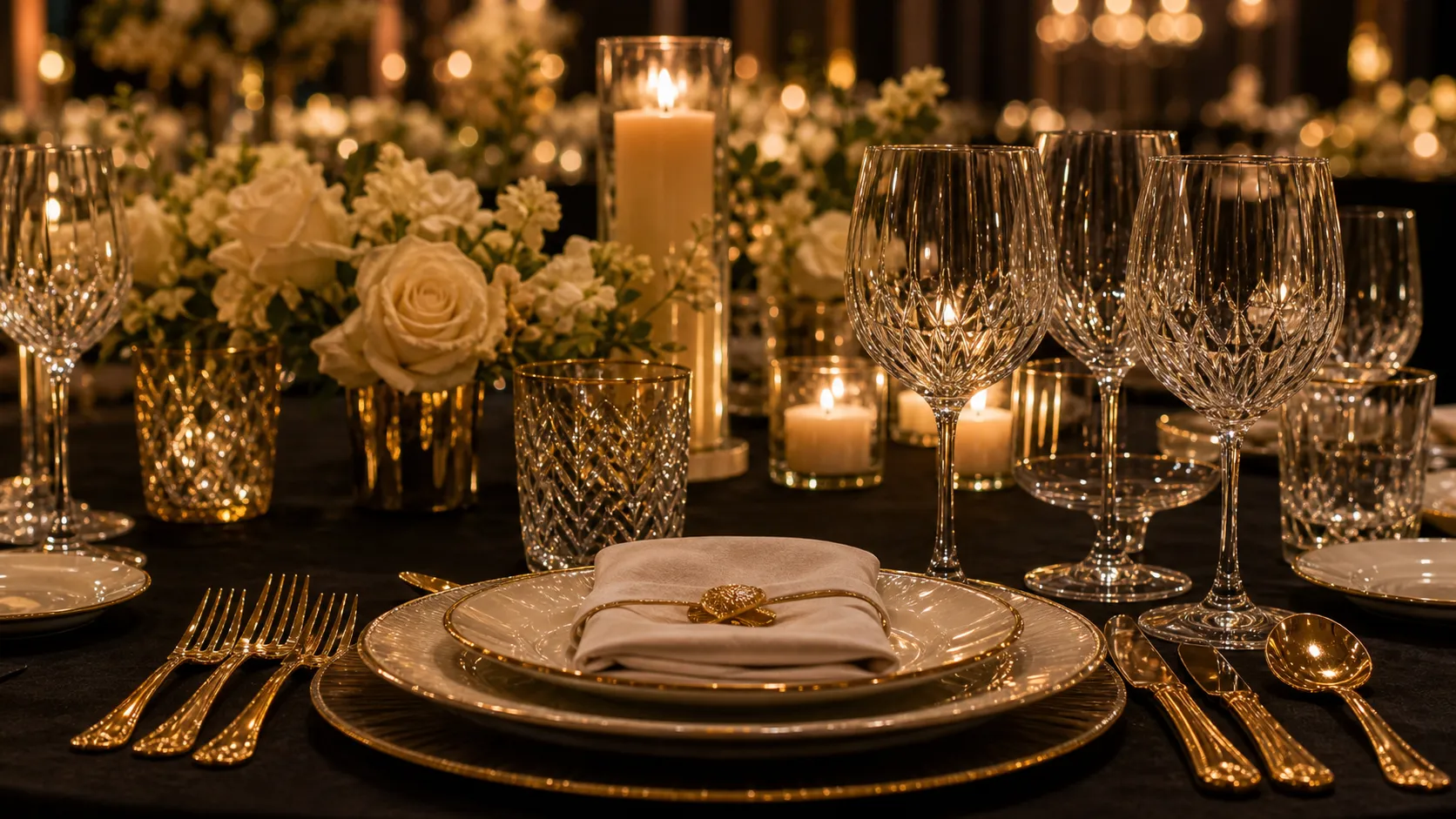
The least glamorous person on a candlelit build is often the most important. Heritage venues, marquees and yachts each carry their own fire load, their own clearances and, increasingly, their own marshal who signs off the scheme before a match is struck. The house treats that conversation as part of the drawing, not an obstacle to it. Clear paths to every exit. Hard standoffs between flame and fabric. Sand-filled bases that cannot be kicked over by a dancer. Two crew on nothing but flame management once the evening begins, invisible in dark clothing, moving the way good waiters move.
None of this is the part a guest remembers. They remember that the room was warm in the right way, that the faces across the table looked like the best versions of themselves, that the dark was kind. That feeling is not luck and it is not a filter. It is a count, a glass, a wind reading and a rehearsal, multiplied by a thousand and then by ten. Some evenings are built by hand. The ones lit by flame are built twice.
WRITTEN BY THE DESIGN ATELIER · THE MEHFIL HOUSE, LOWER PAREL · MAY 2026
Light the room.Twice, if it asks.
Begin an enquiryTHE HOUSE IS NOW RESERVING WINTER 2027