Pink, the navyblue of India.
The house signs its work in one colour. It is not a brand decision. It is a country.
Diana Vreeland, who edited the most exacting eye in fashion for three decades, once declared that pink is the navy blue of India. She meant it as the highest compliment. In a country where pink is not a soft pastel but a structural, load-bearing colour, worn by men and women alike, painted onto whole cities, dyed into the most formal silk a family owns, it does the work that navy does in a European wardrobe. It is the serious choice. It is the colour you reach for when the occasion matters most.
So when the house chose a single shade to sign its drawings, its rules and its rooms, it did not pick rani because it is pretty. It picked rani because it is the most Indian possible way to say this evening is formal, this evening is important, this evening is ours.Rani is the deep, saturated magenta of a Jaipur bandhani, of a bride’s leheriya, of the dye that does not fade in the sun. It is a colour with a spine.
Three weddings, one colour
The clearest way to understand a colour is to watch it do different work in different rooms. The house has built three weddings that were, in the end, studies in rani, and no two used it the same way.
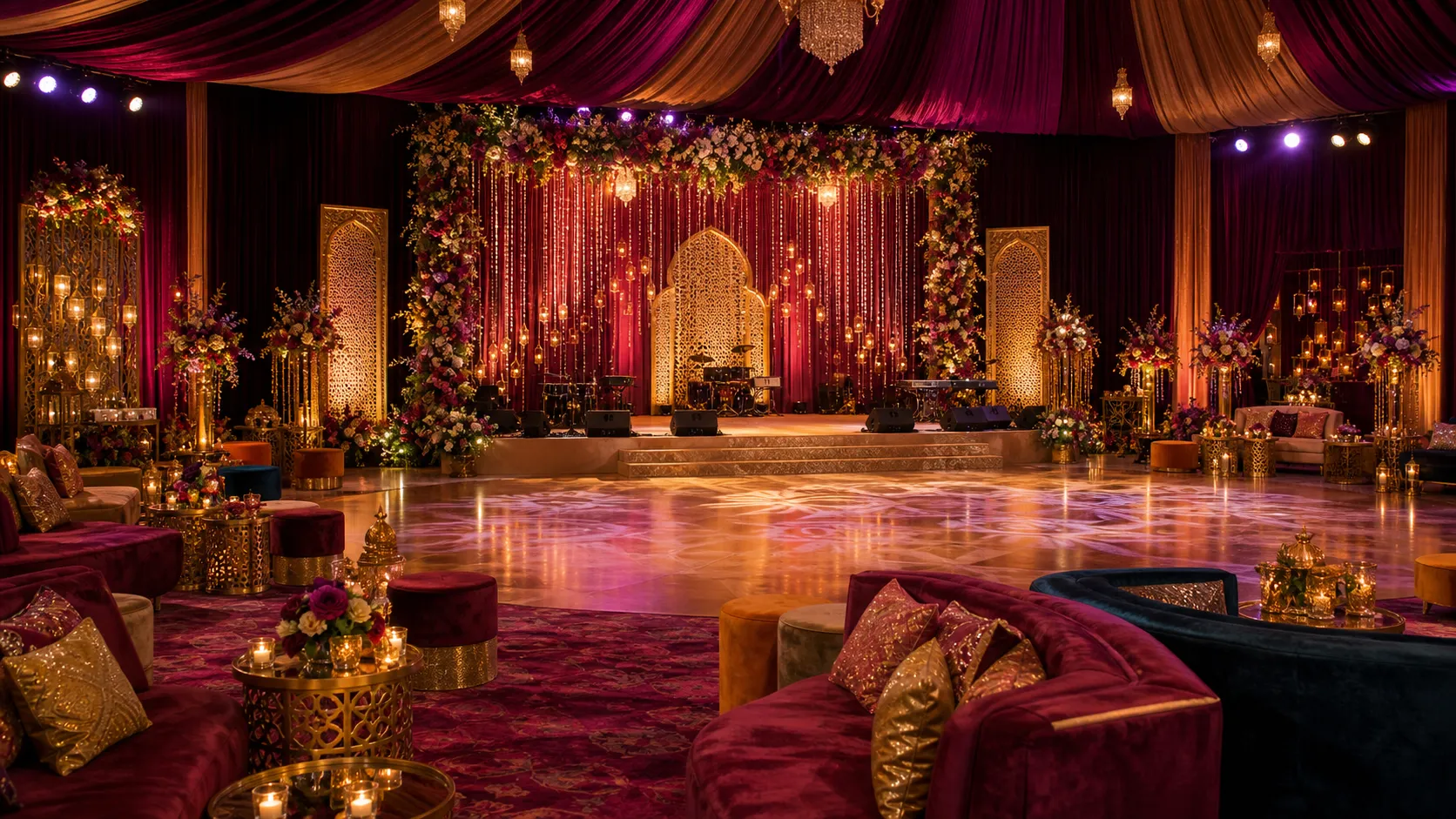
The first was loud. A sangeet for three hundred and eighty in Jaipur, where rani was the whole room: drapery, light, the saris, the stage. Here the colour was volume turned up, a deliberate saturation that told every guest the moment they walked in that restraint had been left at the door. The house lit it so the magenta read as jewel, not neon, and let everything else, the brass, the marigold, the skin, glow warmer against it.
Used once, it is a flower. Used as the architecture of an evening, it becomes a country announcing that something serious is about to happen.
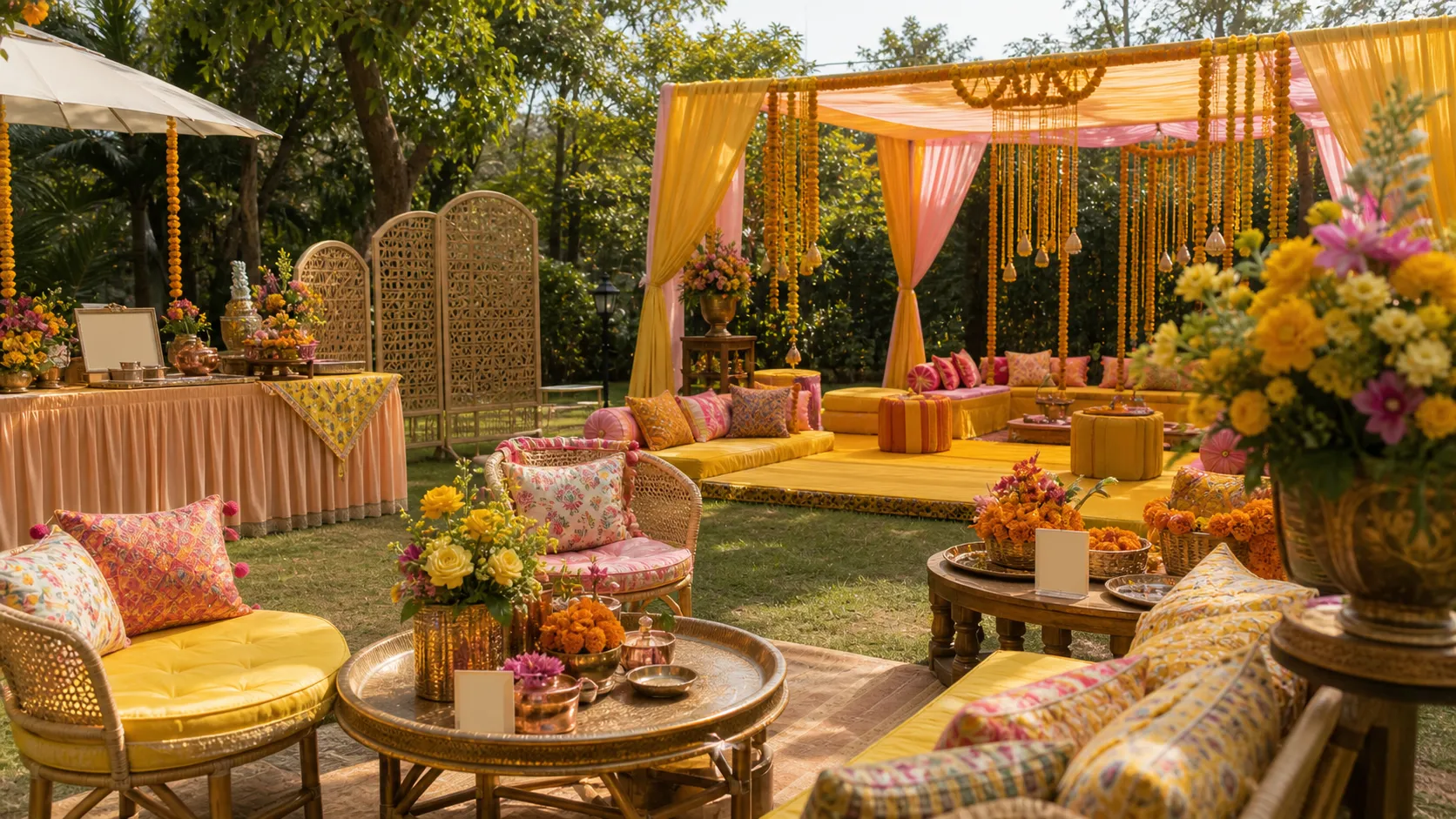
The second was a whisper.A winter mehndi for a small family, where rani appeared only twice: a single ribbon of bandhani down a long ivory table, and the dye in the bride’s own hands. Against all that pale linen and marigold, two strokes of the colour did more than three hundred would have. Restraint is its own kind of confidence, and a colour this strong does not need to be everywhere to be the thing you remember.
The third refused it. A reception that wanted no pink at all, in deep green and candle gold, and the house obliged completely, save for one private detail: the menu cards, seen only by those at the table, were edged in the faintest rani line. Even when the house does not use its colour, it leaves it as a signature, the way a painter initials a corner.
Why a house needs a colour at all
A colour is a discipline. It forces every other decision to answer to something. When the house argues over a tablecloth, a light, a flower, the question is never only is it beautiful but does it belong in a room that knows what rani means. That is what Vreeland understood about navy and India understood about pink long before her: the right colour is not decoration. It is a position. The house takes it, on every drawing, in a single square of magenta in the corner, and lets the rest of the evening rise to meet it.
WRITTEN BY THE DESIGN ATELIER · THE MEHFIL HOUSE, LOWER PAREL · JANUARY 2026
Bring a colour.We will build it a room.
Begin an enquiryTHE HOUSE IS NOW RESERVING WINTER 2027